 Pin it
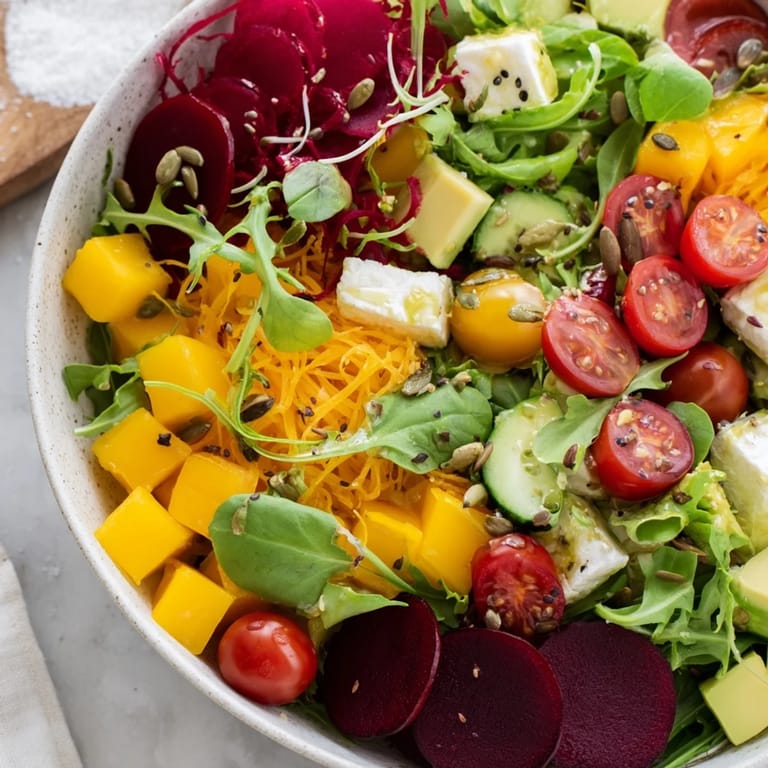
 I remember the first time I visited an art gallery and felt completely overwhelmed by a massive abstract expressionist canvas—all wild brushstrokes and clashing colors that somehow made perfect sense together. Years later, while standing in my kitchen surrounded by the most beautiful vegetables I could find at the farmer's market, that same feeling hit me. I thought, why not bring that artistic chaos to the plate? That's when the Abstract Expressionist Splash was born—a salad that celebrates color and texture with reckless abandon, just like Pollock with a paintbrush.
I made this salad for a dinner party last spring when a friend was going through an art history phase, and watching everyone pause before eating it—actually stopping to admire the colors and arrangement first—reminded me that food is as much about beauty as it is about taste. Someone even took a photo before mixing it up, which felt like the highest compliment.
Ingredients
- Cherry tomatoes (red and yellow), halved: The stars of the show—their bright jewel tones are what catch your eye first. Buy them a day or two before so they're perfectly ripe but still firm enough to hold their shape on the platter.
- Small golden beet, peeled and shaved: These bring an earthy sweetness and that glowing golden color that makes people stop and stare. A mandoline saves your knuckles and creates those perfect thin ribbons.
- Small cucumber, sliced into ribbons: The refreshing core that keeps this salad from feeling heavy. A vegetable peeler transforms it into ribbons that drape beautifully across the greens.
- Red radishes, thinly sliced: They add a peppery bite and those gorgeous pink-and-white rings that almost look hand-painted onto the plate.
- Watermelon, cut into irregular cubes: The secret weapon for unexpected sweetness and those shocking pink cubes that look almost unreal. Cut them just before serving so they stay juicy.
- Ripe avocado, cubed: Creaminess that grounds all the bright, sharp flavors. Add it last so it doesn't brown, and choose one that yields slightly to pressure.
- Mixed baby greens (arugula, baby spinach, frisée): Your canvas—use whatever looks freshest. The mix of tender and slightly peppery leaves gives complexity to what could be just a pretty pile of vegetables.
- Fresh mint leaves, torn: A whisper of cooling herbal brightness that ties unexpected ingredients together. Tear by hand rather than cutting so they don't bruise.
- Toasted pumpkin seeds: The crunch that makes you notice texture. Toasting them yourself deepens their nutty flavor, though good quality store-bought works fine in a pinch.
- Pomegranate seeds: Bursts of tart-sweet juice that surprise you. Their jewel-like appearance is half the appeal, so don't skip them even if they seem fancy.
- Crumbled feta cheese: Salty, tangy counterpoint to all the sweetness. Crumble it by hand for irregular pieces that feel more artistic than perfectly diced.
- Extra-virgin olive oil: The foundation of your dressing—this is where quality matters. Something peppery and golden sets the whole thing apart.
- White balsamic vinegar: Milder and slightly sweeter than regular balsamic, it doesn't darken your beautiful colors. If you only have regular balsamic, use it sparingly.
- Honey: Just enough to round out the sharp edges and balance the vinegar's tang.
- Dijon mustard: An emulsifier that helps the dressing cling to the leaves rather than pooling at the bottom.
- Salt and freshly ground black pepper: Season to taste, though remember feta is already salty so go easy at first.
Tired of Takeout? 🥡
Get 10 meals you can make faster than delivery arrives. Seriously.
One email. No spam. Unsubscribe anytime.
Instructions
- Gather your colors:
- This is the fun part—lay out all your prepped vegetables in separate bowls or small piles. Step back and look at them together. Do you have enough color contrast? Does one color dominate? You're building a visual composition here, so spend a moment making sure your palette feels balanced.
- Build your base:
- Scatter the mixed baby greens and torn mint loosely across your large platter or shallow bowl. Don't pack them down—you want them to look alive and organic, like a painter's first layer of color. Leave some gaps and create gentle mounds.
- Create the chaos:
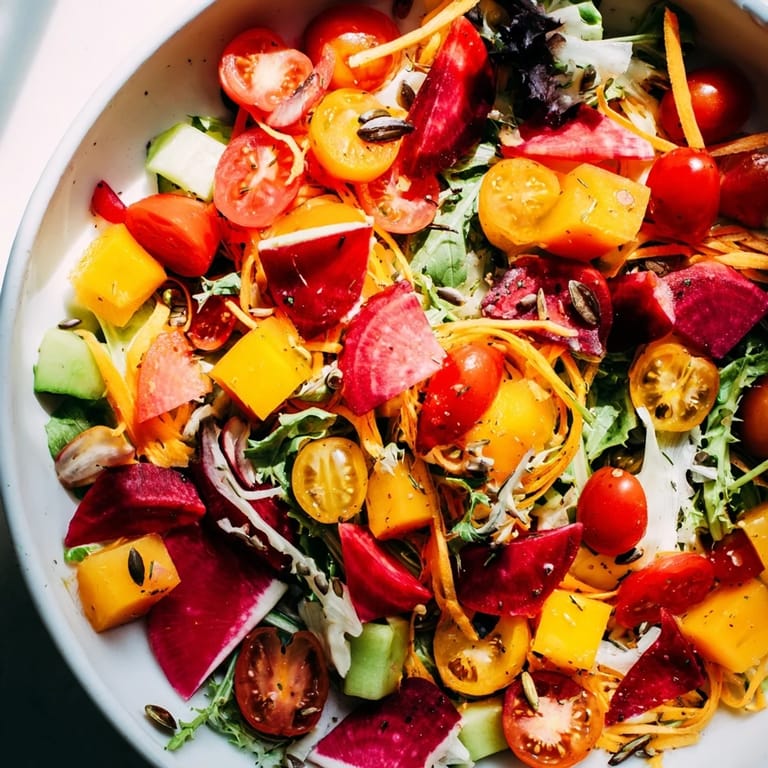
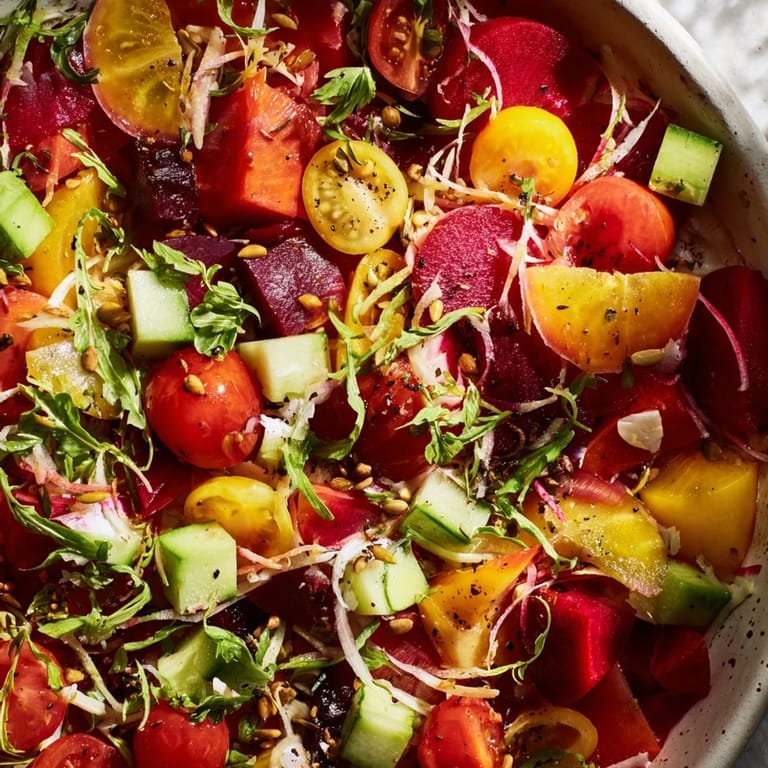
- This is where you forget about neat lines and symmetry. Take each vegetable and scatter it across the greens in an intentionally wild pattern. Let the tomato halves roll where they want. Lay down overlapping cucumber ribbons. Sprinkle radish slices in one area, watermelon cubes in another. Watch the colors talk to each other. The beet shavings should peek through in places, creating visual depth. If something doesn't feel right, move it. This is your artwork.
- Add texture and shimmer:
- Scatter the toasted pumpkin seeds in irregular clusters, then do the same with pomegranate seeds. They should look accidental, like someone splashed them across the plate. Crumble the feta cheese over everything, letting pieces settle where they fall. The unevenness is what makes it look intentional and artistic rather than just messy.
- Make the dressing:
- In a small bowl, whisk together the olive oil, white balsamic vinegar, honey, and Dijon mustard. Keep whisking until it emulsifies and turns slightly creamy. Taste it and adjust—a pinch more honey if it's too sharp, a squeeze more vinegar if it needs brightness. Salt and pepper to your preference.
- Apply your brushstrokes:
- Pour that gorgeous dressing into a spoon or small container. Now drizzle it across the salad in zigzags, splatters, and abstract patterns—like you're recreating Jackson Pollock's technique on your plate. Don't be neat about it. The dressing should pool in some spots and streak across others. This is the final layer of your artwork.
- Serve and let them admire:
- Bring it to the table and let people see it whole before anyone digs in. There's a moment of appreciation when something beautiful arrives on the table, and this salad deserves that moment. Then let everyone mix it together and find their own combination of flavors.
 Pin it
 What struck me most when serving this salad wasn't just the compliments about how it looked, but the way it changed the whole dinner. Everyone slowed down, actually tasted individual ingredients, and suddenly a simple salad became the moment people remembered from the meal. That's when I realized this dish is more about intention than ingredients—it's about saying to the people you're feeding, 'I saw beauty and wanted to share it with you.'
Playing with Color Theory on Your Plate
I learned about complementary colors by accident while making this salad repeatedly. The red tomatoes pop against the golden beets. The pink watermelon vibrates next to the deep purple radish skin. The bright green avocado sings when surrounded by red. If you pay attention to which colors you place near each other, the whole salad starts vibrating with energy. It's not magic—it's just knowing that warm colors dance with cool colors, and saturation matters. When you're at the market picking vegetables, hold them next to each other before buying. Does that golden beet actually complement the tomatoes you chose? Once you start thinking about salad as a color composition, you'll never make a boring one again.
The Art of Imperfection
One of the hardest things for me to learn was that symmetry is the enemy of this salad. My first attempt was too organized—I arranged everything in careful circles, and it looked like a design project, not food. Then I watched a chef just scatter ingredients with one hand, and something clicked. The irregular placement is what makes it feel alive and energetic. Uneven means intentional. Wonky means artistic. The gaps between ingredients matter as much as the ingredients themselves. When you're arranging this salad, embrace asymmetry. Let things overlap messily. Trust that your eye will find the composition even without straight lines.
Making It Your Own
This salad is a jumping-off point, not a rigid formula. Change it with the seasons and your mood. In summer when berries are everywhere, swap some tomatoes for raspberries or blackberries. In autumn, add roasted beets instead of raw, or crumbled roasted sweet potato for deeper color and earthiness. If you want it more substantial, add crispy chickpeas or toasted nuts. If dairy isn't your thing, substitute cashew feta or just skip it entirely—the salad is beautiful enough without it.
- The dressing can shift too: try lime and cilantro instead of balsamic and mint for a completely different flavor profile.
- Edible flowers like pansies or nasturtiums take this from artistic to truly gallery-worthy if you can find them.
- Don't overthink it—the only rule is that it should make you happy to look at before you eat it.
 Pin it
 Every time I make this salad, I'm reminded that cooking doesn't have to be complicated to be meaningful. Sometimes the simplest act—arranging beautiful things thoughtfully on a plate—is enough to transform a meal into a moment. Serve it with curiosity, and watch what happens.
Recipe FAQs
- → What makes this salad visually unique?
The salad mimics abstract expressionist art by layering vibrant ingredients in an irregular, colorful arrangement that highlights diverse textures.
- → Can this salad accommodate dietary restrictions?
Yes, it's vegetarian and gluten-free by default. For dairy-free options, substitute feta with vegan cheese.
- → How should the dressing be prepared?
Whisk olive oil, white balsamic vinegar, honey, Dijon mustard, salt, and pepper together until emulsified for a balanced, tangy dressing.
- → What are good serving suggestions?
Serve immediately to showcase the dressing’s artistic drizzle; pair it with crisp white wine or sparkling citrus water for a refreshing complement.
- → Are there any tips to enhance flavors or presentation?
Adding edible flowers or roasted purple sweet potatoes enhances color contrast. Roasting seeds lightly can boost their crunch and aroma.