 Pin it
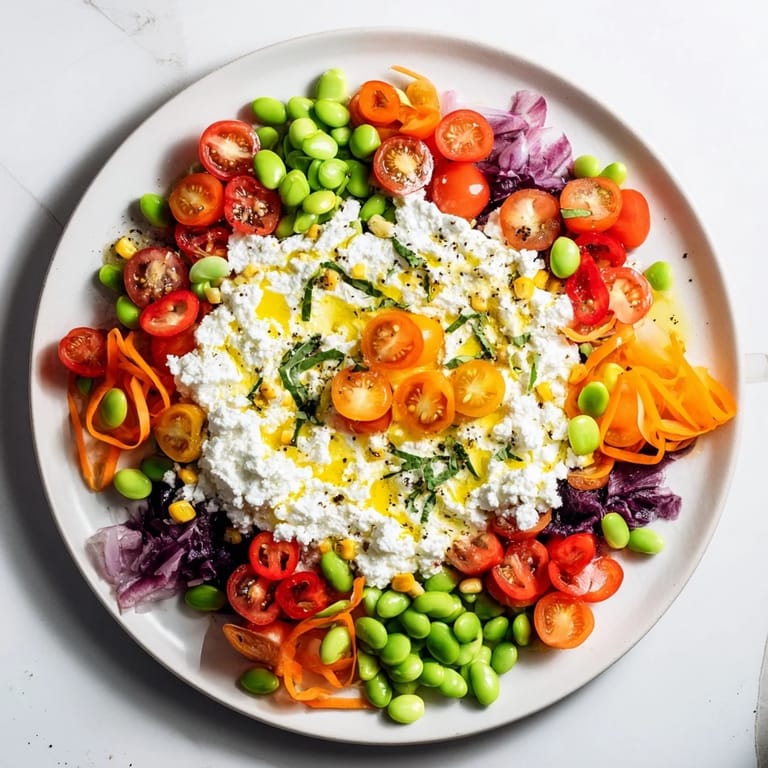
 I was arranging ingredients on my counter one afternoon when my daughter stopped and asked why everything had to be brown and green on her plate. That question stuck with me, and I found myself thinking about how we eat with our eyes first. The Prism Burst came from wanting to prove that a salad could be a celebration of color and freshness all at once, something that made you smile before you even took a bite. Building it layer by layer felt like painting with vegetables, each hue a promise of crispness and flavor waiting beneath.
I made this for a potluck once and watched people gravitating toward it even though there were heavier, more complicated dishes available. Someone asked if it was too pretty to eat, which felt like the highest compliment. After that dinner, I realized beautiful food tastes better because you slow down and actually notice what you're eating instead of just consuming it.
Ingredients
- Ricotta cheese: The creamy white anchor that everything radiates from—Greek yogurt works beautifully if you prefer something lighter, and the ricotta should be spooned gently so it doesn't compress.
- Extra-virgin olive oil: Use a good one for both the base and the dressing; it's the difference between a dish that tastes okay and one that tastes intentional.
- Lemon zest: Just a teaspoon brings brightness without overwhelming anything, and fresh zest makes a real difference.
- Cherry tomatoes: Halve them lengthwise so they have flat sides that look neat when fanned, and taste one first to make sure they're actually sweet.
- Bell peppers in red, orange, and yellow: Slice them thin against the grain so they stay crisp and lay flat without curling.
- Carrots: Shred them finely so they don't overpower the arrangement with their texture.
- Sweet corn: Fresh or frozen works equally well; thaw it completely and pat it dry so it doesn't make the other vegetables soggy.
- Cucumber: Slice it just before assembling so it stays crisp and doesn't weep water onto the other layers.
- Edamame: Cook and shell ahead of time, then chill them so they stay firm and bright green.
- Fresh herbs: Parsley, basil, or mint all work—I usually mix them so no single flavor takes over.
- Blueberries: They're your blue layer and surprisingly delicious mixed with the vegetables; choose firm ones that won't roll away.
- Purple cabbage: Shred it finely so it mingles with the berries and adds a subtle earthiness.
- Red grapes: Halve them so they rest flat and contribute their sweetness to the violet layer without competing too much.
- Radishes: Slice them paper-thin for the pink-violet notes; they bring a peppery snap that brightens everything.
- Lemon juice and honey: The dressing comes alive when you balance the acid and sweetness, so taste and adjust as you go.
Tired of Takeout? 🥡
Get 10 meals you can make faster than delivery arrives. Seriously.
One email. No spam. Unsubscribe anytime.
Instructions
- Build your white base:
- Mix the ricotta with olive oil, lemon zest, salt, and pepper until it's creamy but still holds its shape. Spoon it onto the center of your platter and spread it into a small circle—this is your focal point, so take a breath and let it be imperfect.
- Prep your color groups:
- Arrange each color category in its own small bowl so you can see what you're working with and grab handfuls without fumbling. This step makes the actual assembly feel calm instead of chaotic.
- Fan out the prism:
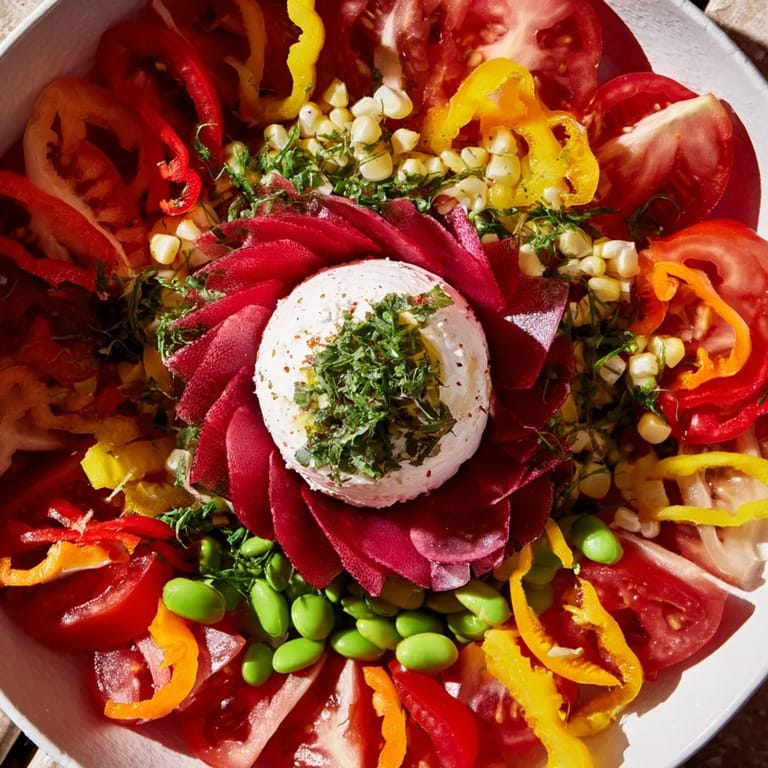
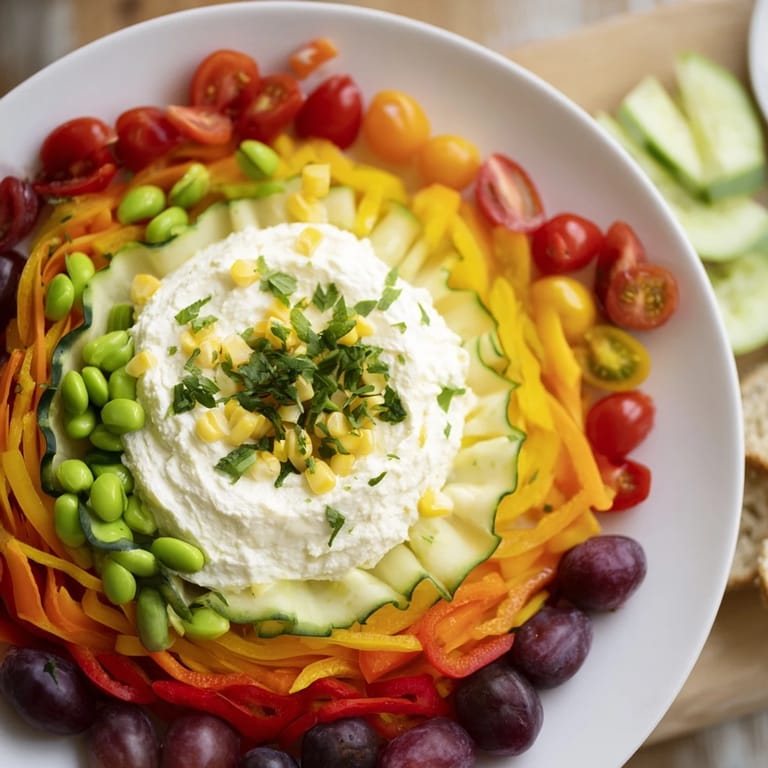
- Starting right next to the white base, begin with the red vegetables and fan them outward in a gentle arc, letting them overlap slightly. Move to orange, then yellow, then green, then blue, then violet, working outward in visible stripes like light breaking through a prism—your hands or the back of a spoon can guide them into place without crushing anything.
- Make the dressing:
- Whisk together the olive oil, lemon juice, honey, salt, and pepper until it emulsifies and tastes like you'd want to eat it on a plain piece of bread. Taste it on a vegetable to make sure it's balanced.
- Dress and finish:
- Drizzle the dressing lightly just before serving, or set it aside so people can choose how much they want. A final scatter of fresh herbs and black pepper brings everything home.
 Pin it
 There's something almost meditative about arranging this salad, watching it come together layer by layer. It became the dish I make when I want people to feel celebrated without making them feel like I've spent all day cooking.
Why Color Matters on the Plate
I used to think plating was something only restaurant chefs worried about, but this salad taught me differently. When food looks intentional, people linger over it, they taste it more carefully, they share it more happily. The arrangement forces you to pair different flavors and textures with every bite instead of getting the same mouthful twice. It's the difference between food being fuel and food being an experience.
The Flexibility That Makes It Work
This salad doesn't demand perfection or exact proportions; it invites you to work with what makes you happy and what you have on hand. Swap ricotta for Greek yogurt or a plant-based cream if that's what you prefer, add toasted nuts for crunch, try edible flowers if you see them at the market. The structure—radiating colors from a white center—stays the same, but the details are yours to play with.
Serving and Storage Wisdom
This is a salad that lives in the moment; it's best eaten within an hour or two of assembly when everything is at its crispest and brightest. If you're bringing it somewhere, pack the components separately and assemble at the last minute, or bring the dressing in a jar and let people dress their own portions. It keeps people engaged and the vegetables stay where they're supposed to be.
- Layer tender herbs right before serving so they don't wilt or darken.
- A crisp white wine like Sauvignon Blanc or a sparkling option complements the fresh vegetables beautifully.
- Make extra dressing because people always want more, and it works on any vegetable leftovers you might have.
 Pin it
 This salad reminds me that sometimes the simplest meals are the ones people remember, not because of how long they took, but because of how they made everyone feel. Serve it with confidence and watch people rediscover vegetables they thought they already knew.
Recipe FAQs
- → What is the base of the Prism Burst salad?
The base consists of ricotta cheese mixed with olive oil, lemon zest, salt, and pepper, creating a creamy and tangy foundation.
- → How are the colorful layers arranged?
Fresh vegetables and fruits are sliced and arranged in a fan pattern radiating outward from the central white base, showcasing their vibrant hues.
- → Can the salad be made vegan?
Yes, substituting ricotta with vegan cream cheese or plant-based yogurt allows for a dairy-free version without compromising texture.
- → What dressing complements the layers?
A light vinaigrette of olive oil, lemon juice, and honey (or agave syrup) enhances the flavors without overpowering the fresh ingredients.
- → Are there suggestions to add texture to this dish?
Toasted nuts or seeds such as pumpkin, sunflower, or pine nuts add a delightful crunch and complement the fresh components.