 Pin it
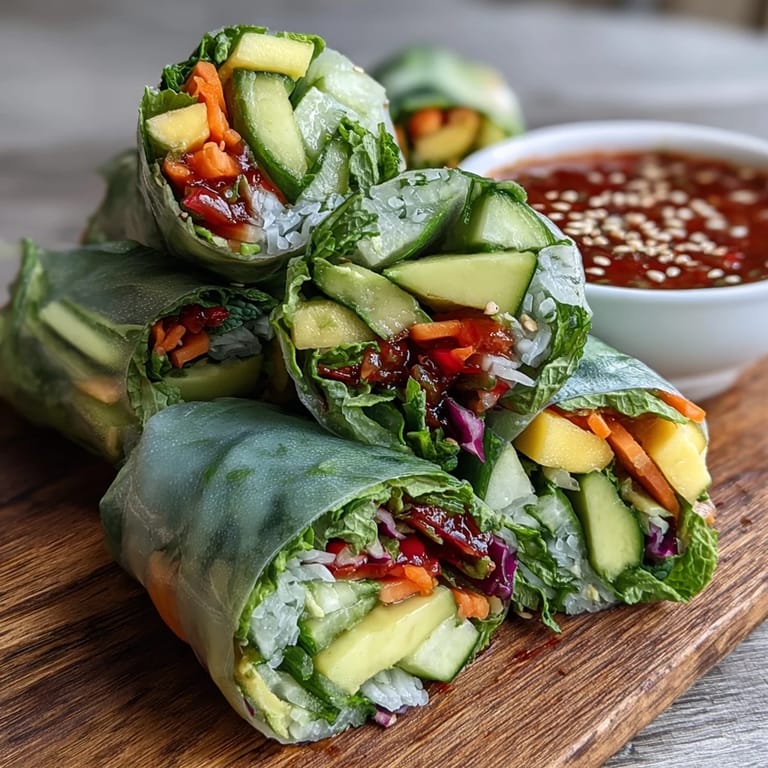
 There's something about assembling spring rolls that slows everything down in the best way. One afternoon, while the kitchen was quiet and sunlight streamed across the counter, I started laying out strips of mango and avocado like I was arranging a still life painting. The rice paper soaked just long enough, turning from brittle to silky, and suddenly I understood why these rolls feel like edible art. They're proof that the simplest ingredients, treated with a little care, become something memorable.
I made these for a potluck once where everyone seemed stuck in their usual food routines, and watching people's faces light up when they bit into that bright, herbaceous freshness was genuinely moving. Someone asked if I'd made them at a restaurant, and I loved being able to say they were homemade and completely customizable. That's when I realized these rolls aren't just food; they're a conversation starter.
Ingredients
- Rice paper wrappers: These delicate sheets are the foundation of everything, and the 22 cm size gives you enough room to work with filling without feeling cramped or wasteful.
- Ripe mango: Choose one that yields gently to pressure and has that honeyed fragrance at the stem end; underripe mango will be grainy, overripe will be mushy.
- Ripe avocado: Perfectly ripe avocado slices cleanly and stays intact during rolling, so resist the urge to use one that's still firm.
- Carrot and cucumber: Julienning these by hand or with a mandoline creates thin, elegant strands that roll easily and add satisfying crunch.
- Red bell pepper: The thin slices contribute a subtle sweetness and brilliant color that photographs beautifully.
- Purple cabbage: Shredded finely, it stays crisp and adds earthiness that balances the fruit.
- Fresh mint, cilantro, and basil: These herbs are the soul of the roll; don't skip them or use dried substitutes, as the brightness matters enormously.
- Sweet chili sauce: Store-bought works perfectly, but homemade gives you control over heat and sweetness levels to match your preference.
- Lime juice and soy sauce: These two elements brighten and deepen the sauce, creating complexity in something simple.
- Toasted sesame seeds: Optional but worthwhile for a subtle nuttiness that lingers on your tongue.
Tired of Takeout? 🥡
Get 10 meals you can make faster than delivery arrives. Seriously.
One email. No spam. Unsubscribe anytime.
Instructions
- Set up your assembly station:
- Arrange all your prepped vegetables, fruits, and herbs on a large platter or cutting board so everything is within arm's reach. This prevents you from scrambling mid-roll and makes the whole process feel calm and meditative.
- Prepare the rice paper:
- Fill a shallow dish with warm (not hot) water and submerge each wrapper for about 10 to 15 seconds until it becomes pliable but still has a slight firmness. Over-soaking turns it gummy; under-soaking leaves it brittle.
- Lay and arrange:
- Place the softened wrapper on a damp kitchen towel or cutting board, then layer a small handful of filling in the lower third of the wrapper. Think restrained; too much filling will burst through the sides.
- Roll with intention:
- Fold the bottom edge of the wrapper over the filling, tuck in both sides like you're wrapping a present, then roll tightly upward. The wrapper will seal itself if you've soaked it correctly.
- Whisk the sauce:
- Combine sweet chili sauce, lime juice, and soy sauce in a small bowl, stirring until smooth. Add sesame seeds if you want that final toasted flourish.
- Serve immediately:
- Spring rolls are best enjoyed within minutes of rolling while everything is still crisp and the herbs are most fragrant.
 Pin it
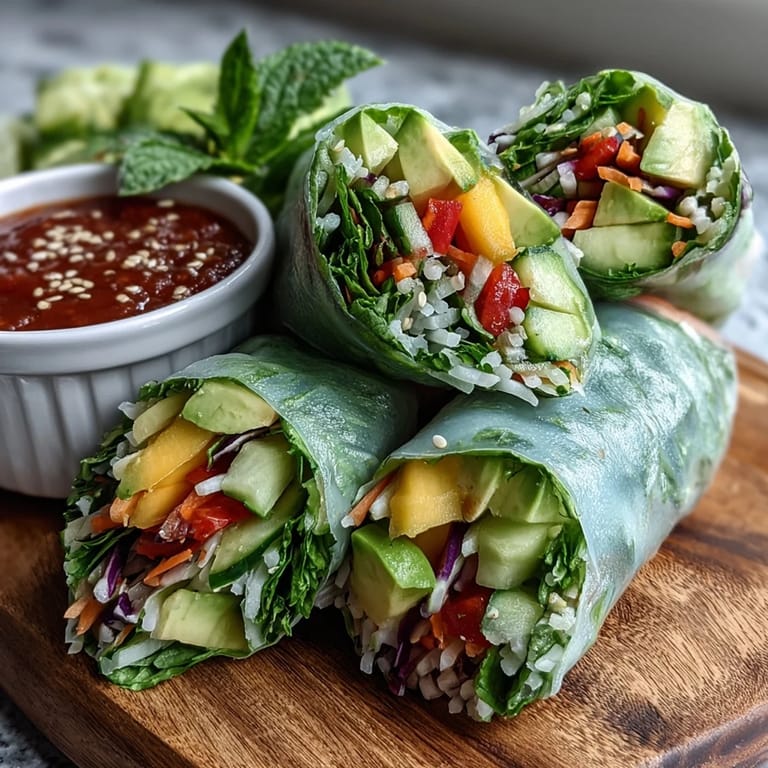
 There was an evening when my partner came home from a long day and I had these spring rolls waiting, the sauce in a small bowl, everything cold and bright. We sat down without ceremony, and in that quiet moment of eating something I'd made with intention, I felt the simple power of feeding someone well. Food like this reminds you that care lives in details.
Choosing Your Produce
The quality of your spring rolls lives or dies by the ripeness of your mango and avocado. I learned this the hard way after buying beautiful-looking fruit that turned out to be mealy and disappointing. Now I shop a day or two before rolling, pressing gently near the stem end to gauge ripeness, and I'm never shy about asking the produce person for their recommendation. They usually appreciate being asked and will steer you toward the best specimens.
The Art of the Rice Paper
Rice paper has a learning curve, and I won't pretend otherwise. The first time I soaked one, I left it in too long and ended up with a wrapper that fell apart the moment I tried to fill it. The second time, I barely wet it and it cracked as I rolled. By the third attempt, something clicked, and now I can feel the exact moment when it transitions from brittle to workable. That tactile knowledge comes from doing it, failing, adjusting, and trusting your instincts more than any timer.
Make It Your Own
These spring rolls are a canvas, and you should absolutely treat them that way. I've added thin strips of marinated tofu for protein, swapped cilantro for Thai basil when that's what I had on hand, and even used young spinach leaves as a green base layer. The formula is solid, but your preferences matter more than any instruction I could give. A friend of mine makes hers with peanut butter swirled into the sauce and says she'll never go back, and honestly, I believe her.
- Add marinated tofu or tempeh slices for protein without changing the flavor profile much.
- Try different herbs like Thai basil or parsley if cilantro isn't your thing.
- Make the sauce spicier by adding fresh chili to your homemade version or choosing a spicy store-bought sauce instead.
 Pin it
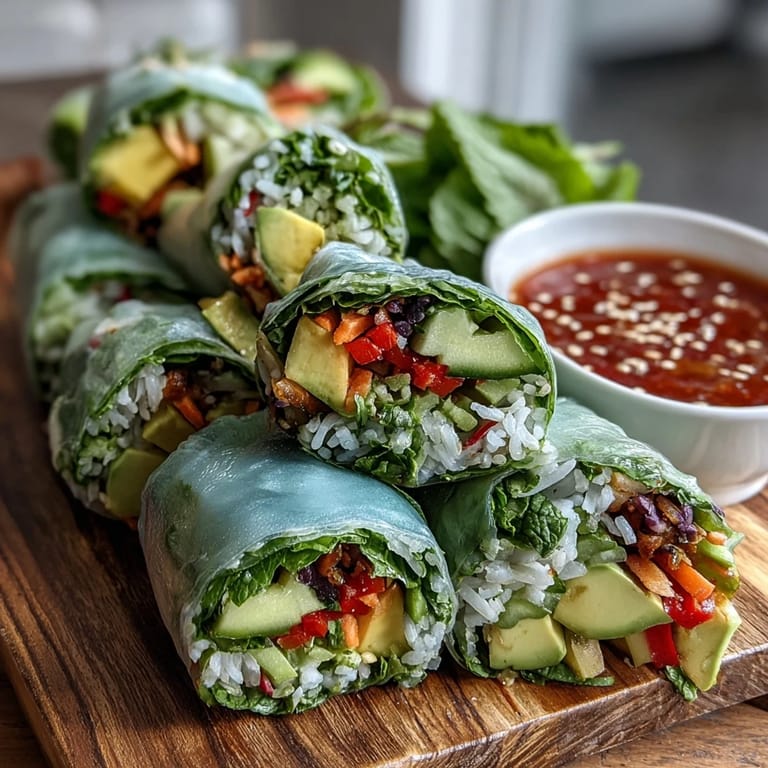
 These spring rolls are the kind of recipe that pays back your effort with brightness and joy. Whether you're making them for yourself on a quiet afternoon or for people you love, they're proof that simple food, made thoughtfully, is always enough.
Recipe FAQs
- → How do I prevent rice paper from tearing?
Soak each wrapper in warm water for just 10–15 seconds until pliable. Avoid over-soaking as this makes them too fragile. Work on a damp surface and handle gently while rolling.
- → Can I make these ahead of time?
Spring rolls are best enjoyed fresh for optimal texture. If storing, wrap individually in damp paper towels, place in an airtight container, and refrigerate up to 24 hours. The sauce can be prepared 2–3 days in advance.
- → What vegetables work well in spring rolls?
Julienned carrots, cucumber, bell peppers, purple cabbage, and snap peas all provide excellent crunch. You can also add shredded lettuce, bean sprouts, or thinly sliced radishes for variety and color.
- → Is there a gluten-free option for the sauce?
Use tamari instead of soy sauce and verify your sweet chili sauce is certified gluten-free. Many store-bought varieties contain wheat, so check labels carefully or make the homemade version with gluten-free ingredients.
- → How can I add protein to these spring rolls?
Thin strips of marinated baked tofu, tempeh, or cooked edamame work beautifully. Shredded cooked chicken or poached shrimp also pair well if you're not following a vegan diet.
- → Can I bake or fry these spring rolls?
These fresh spring rolls are designed to be served raw and crispy-cold. For fried versions, use wheat-based spring roll wrappers and deep-fry until golden. The cooking method and wrapper type are not interchangeable.