 Pin it
 I remember the first time I tried arranging food like a painter working with color and light. It was during a dinner party where I wanted to move beyond the usual plated appetizer. I'd been studying how motion is captured in photographs—that beautiful blur where elements fade from focus to softness—and I wondered if I could translate that into a dish. The Kinetic Motion Blur was born from that moment, and now whenever I make it, I'm transported back to my guests' faces as they realized food could be both delicious and genuinely surprising to look at.
There was this moment when I first plated this for a dinner table of eight, and the entire conversation stopped. Not the uncomfortable kind of quiet, but the kind where everyone just looked. I'd spent months refining the technique, learning how to make the arrangement feel intentional rather than scattered, and when it finally worked, I realized I'd created something that made people feel like they were part of something special.
Ingredients
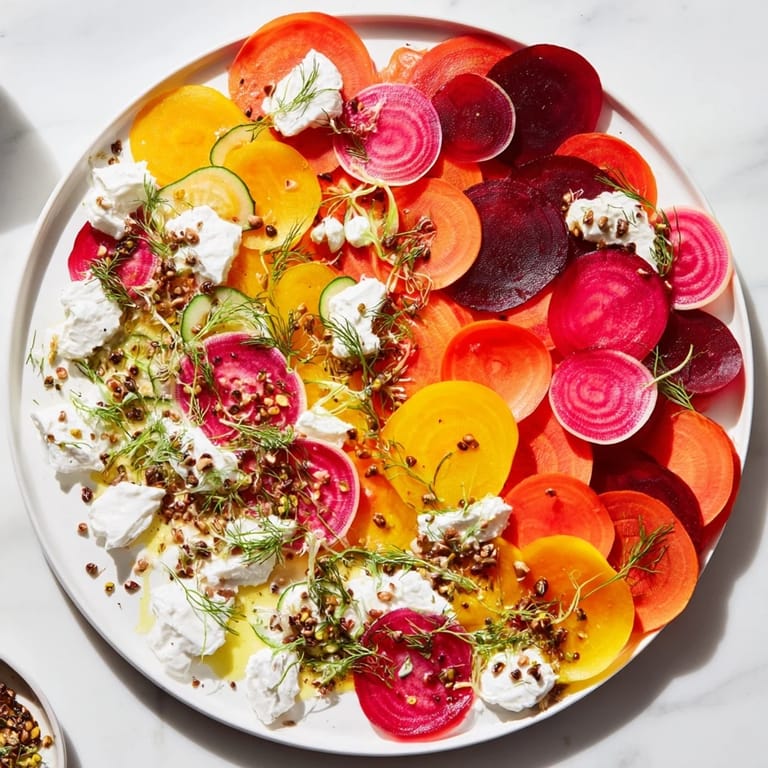
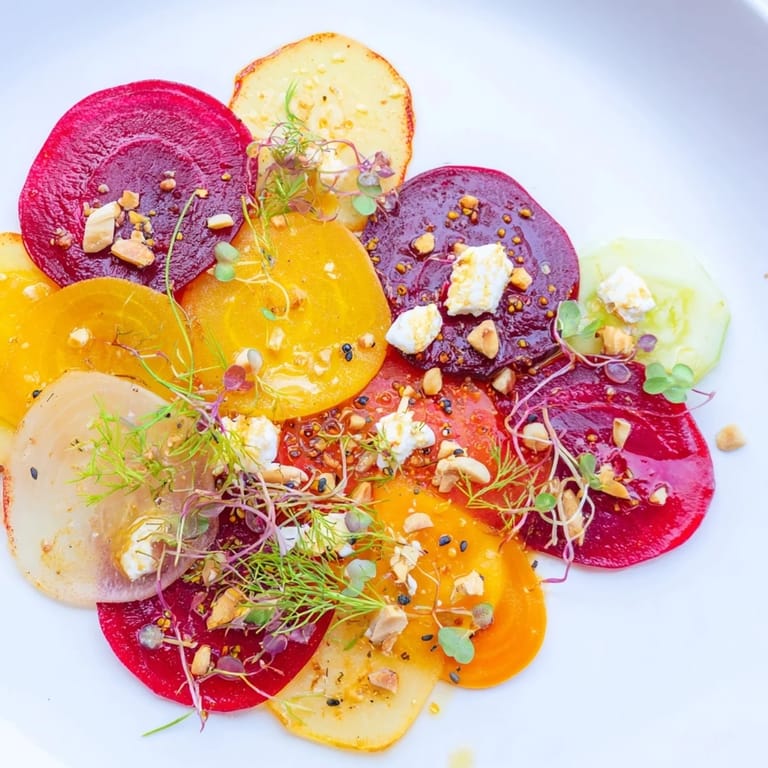
- Golden and red beets: These are your foundation. I learned to slice them paper-thin on a mandoline because that's when they become almost translucent, and that's when the light starts playing with them. The contrast between golden and red creates your most visually striking moments.
- Watermelon radish: This is the secret ingredient that makes people ask what it is. When sliced thin, those pink rings seem to glow. It's purely visual magic, but the peppery taste anchors it in reality.
- Persian cucumber: Keep this one around room temperature before slicing. It'll be crisper and hold its structure better when you're arranging it on the platter. Regular cucumbers get too watery, so this matters.
- Baby carrots on the bias: The angle of the slice changes how they sit on the plate. I learned this by accident when my knife slipped, but those bias cuts create natural lines that guide the eye along your motion blur.
- Creamy goat cheese: Bring it to room temperature so it's easier to dollop and softer to bite into. It's the anchor that ties all these raw vegetables together with something luxurious and rich.
- Toasted hazelnuts: Toast them yourself if you can. The nutty warmth against the cool vegetables is where this dish really comes alive. I buy them in bulk and toast a batch whenever I'm planning something special.
- Black sesame seeds: These aren't just visual texture—they add a subtle earthiness that deepens everything. Regular sesame seeds work, but the black ones feel more intentional.
- Microgreens and fresh dill: These are your finishing brushstrokes. The microgreens add that peppery snap, and dill's delicate fronds feel like they're floating on the plate.
- Dressing of olive oil, lemon, and honey: This simple vinaigrette is balanced enough not to overpower but bright enough to tie everything together. The honey adds a whisper of sweetness that surprises people.
Tired of Takeout? 🥡
Get 10 meals you can make faster than delivery arrives. Seriously.
One email. No spam. Unsubscribe anytime.
Instructions
- Make your dressing first:
- Whisk together your olive oil, lemon juice, honey, salt, and pepper. I always taste it at this stage because it's easier to adjust seasoning now than when everything's plated. Set it aside and let those flavors get to know each other for a few minutes.
- Create your dense cluster:
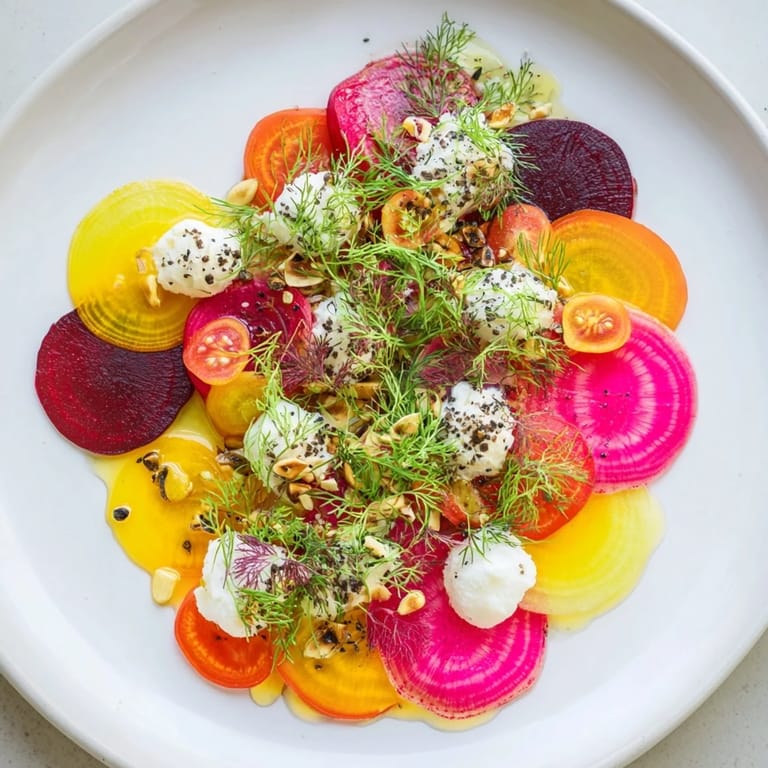
- Start on one side of your platter or plate and overlap your vegetable slices closely, like you're creating a small mountain of color. This is where the visual motion begins. Let them touch, let them overlap, create visual density. Take your time here—this is the focal point.
- Fade to scattered:
- Gradually space out your remaining slices as you move toward the opposite edge. This is where it gets intuitive. You're not just placing vegetables randomly; you're creating a visual journey. The spacing should feel purposeful, like the vegetables are moving across the plate.
- Add the goat cheese:
- Dot small dollops of goat cheese where your vegetables are densest. Feel how soft it is, how it nestles into the vegetables. As you move toward the sparse side, use fewer dollops until you might have just one sitting alone. This distribution reinforces your motion.
- Scatter your nuts and seeds:
- Sprinkle the toasted hazelnuts and black sesame seeds with intention. More where it's dense, fewer where it's sparse. You're reinforcing the visual pattern with every ingredient.
- Finish with greens and dill:
- Scatter your microgreens and dill fronds last. These delicate elements should feel light, like they're the final flourish of a brushstroke. They should appear in your dense area but barely exist in your sparse area.
- Drizzle with purpose:
- Pour your dressing evenly across the platter, but use a lighter hand on the sparse side. The dressing should enhance your composition, not fight it.
- Serve immediately:
- This is the one non-negotiable step. The vegetables will begin to soften, the goat cheese will warm, and the whole arrangement will lose its crispness. Serve it the moment it's ready.
 Pin it
 I remember serving this to my mother for the first time, and she sat with her fork suspended over the plate for so long that I thought something was wrong. When she finally looked up, she had tears in her eyes—not because anything was wrong, but because she said it felt like I'd given her permission to see our everyday vegetables as something worthy of celebration. That's when I understood this dish wasn't really about impressing people. It was about honoring the ingredients and the work that brought them to the table.
The Art of the Arrangement
The kinetic blur effect is less about rules and more about feeling. When you look at photographs of motion, you notice that the sharpest details are concentrated where the action is strongest, and everything becomes softer and more scattered as the motion continues. Think of your platter the same way. Your dense cluster is where all the excitement happens—that's your focal point, your moment of intensity. As you move away from it, you're telling a visual story of motion slowing down, of energy dispersing. This is why the spacing matters. It's not random; it's intentional choreography. I learned to trust my instincts with this, to place each vegetable slice and ask myself, 'Does this feel like it's still moving, or has it come to rest?'
Adapting for Your Ingredients
One of my favorite discoveries was that this technique works with whatever vegetables you have available. I've made this with different root vegetables depending on the season—white beets, chioggia beets with their gorgeous rings, thin apple slices for crunch and a hint of sweetness. Edible flowers like pansies or violets work beautifully too. The structure of the recipe stays the same, but the colors and flavors shift with the seasons. The first time I tried it with spring vegetables like thinly sliced asparagus and radishes, I realized that the dish could be infinitely adaptable while still maintaining its character.
Pairing and Serving Suggestions
This dish shines as the opening act of a meal, the moment before conversation picks up when everyone's still focused on the experience in front of them. A crisp Sauvignon Blanc cuts through the richness of the goat cheese while amplifying the freshness of the vegetables. Dry sparkling wine works beautifully too, especially if you add smoked salmon for a pescatarian twist. I've found that this appetizer sets the tone for the entire meal—it signals that you've thought carefully about what you're serving, and it makes guests feel like they're in for something special.
- If you want to add protein, thin slices of smoked salmon or trout echo the motion theme and add a luxurious feel
- For a vegan version, try cashew cheese or a silken tofu purée instead of goat cheese—it's creamy and still holds the same visual weight
- Make this dish only when your vegetables are at their peak; great arrangement can't rescue sad produce
 Pin it
 Every time I make this dish, I'm reminded that cooking is as much about seeing as it is about tasting. The Kinetic Motion Blur taught me that vegetables deserve to be looked at, really looked at, before we eat them.
Recipe FAQs
- → How do you create the kinetic blur effect with the vegetables?
Arrange the sliced vegetables densely on one side of the plate and gradually spread them out thinner toward the opposite edge to mimic motion and fading.
- → What is the best way to slice the vegetables for this dish?
Use a sharp knife or mandoline to thinly slice the beets, radish, cucumber, and carrots for delicate layering and visual appeal.
- → Can I substitute goat cheese with a vegan option?
Yes, plant-based cheese alternatives can be used to maintain creaminess while keeping the dish vegetarian or vegan-friendly.
- → How does the dressing complement the ingredients?
The olive oil, lemon juice, and honey dressing adds brightness and subtle sweetness, balancing the earthiness of the beets and richness of the goat cheese.
- → What nuts and seeds are included and how are they used?
Toasted hazelnuts provide crunch and warmth, while black sesame seeds add a mild nuttiness; both are sprinkled more densely on the clustered side and trail off.
- → Are there suggestions for variations or pairings?
Try smoked salmon or trout for pescatarian preference, different root vegetables for variety, and pair with crisp white wine like Sauvignon Blanc.